Creating a RAM Disk with the brd Kernel Module: Loading, Mounting, and Auto-Start at Boot
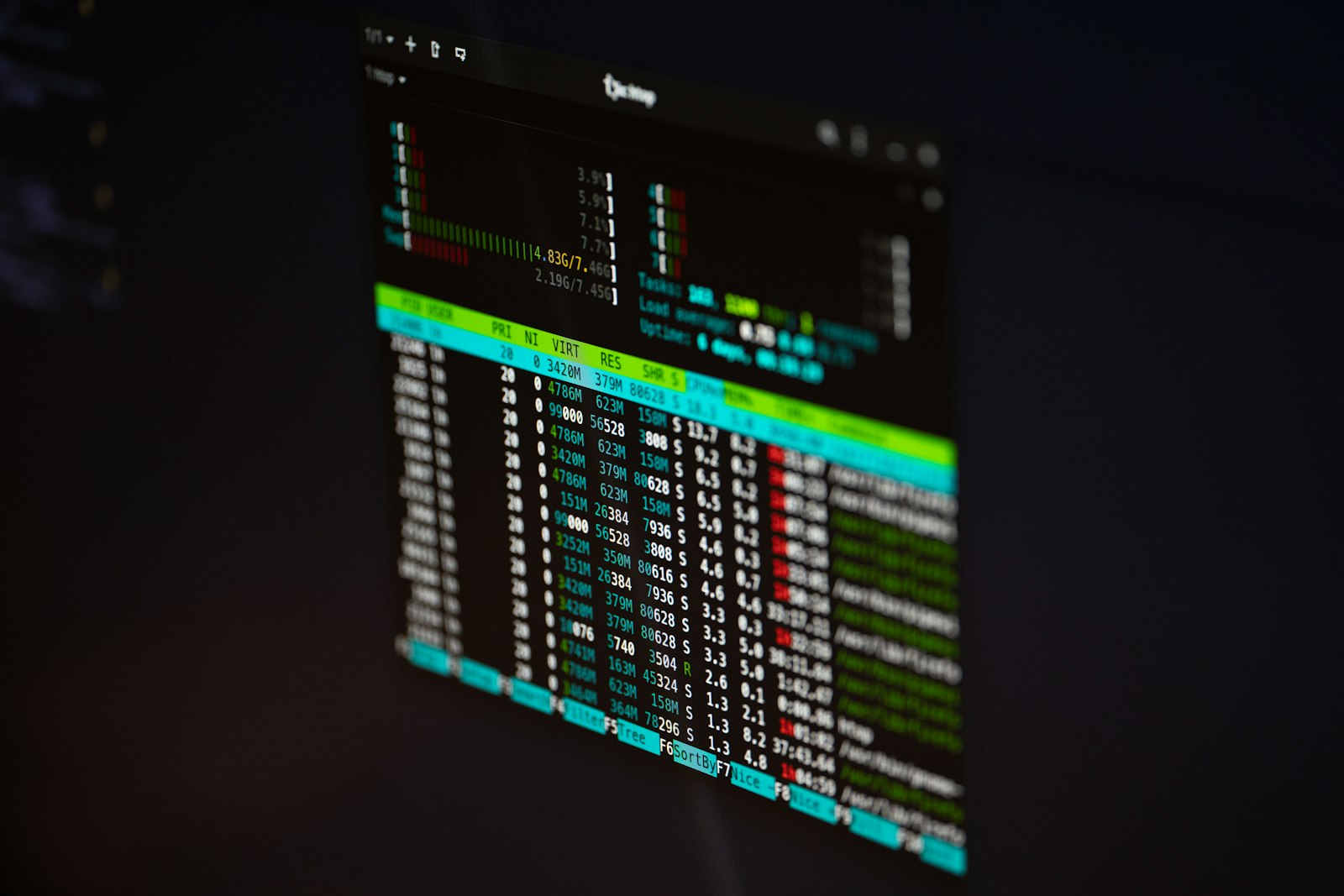
Some data deserves to live only in memory: temporary build artifacts, high-speed caches written and read repeatedly during load testing, scratch files you don’t want wearing out your SSD. For this kind of need there’s no third-party tool to install — the Linux kernel’s built-in brd module conjures a “disk” out of thin air with a single modprobe, with read/write speed equal to memory bandwidth. Honest boundary: brd is a kernel module, and a container environment cannot load host kernel m...
The lastb Command Cheat Sheet: Viewing Failed SSH Login Records
lastb lists failed login records, with data from /var/log/btmp—the binary log dedicated to failed logins. For investigating SSH brute-forcing or confirming “who has been trying to log in lately,” start with this command. The usage and behavior below were tested in a Rocky 9 container: an sshd was stood up, several real logins were attempted with wrong passwords, and all output comes from that reproduction. Basic UsageRun it directly—one failed login per line: username, terminal, source addres...

SSH in a Nutshell: How It Works, What It Does, and Security Practices
If you’ve ever operated a computer remotely, you can’t avoid SSH. In the Telnet era, every line you typed into a remote terminal — passwords included — traveled the network in plaintext, and anyone on the same segment could capture the packets and read it all. In 1995, Tatu Ylönen wrote SSH after a password-sniffing attack, precisely to encrypt that naked channel. This post untangles SSH end to end: what it is, how a connection is established, what it can do beyond login, and what happens whe...
Foxmail Tips Roundup: Accounts, Filtering, and Productivity Settings
Among desktop email clients, Foxmail suits gathering personal and work mailboxes into a single interface for unified management. This post organizes the settings you’ll actually use into a quick-reference checklist across six scenarios — accounts, filtering and sorting, templates, search, calendar, and security — each starting from “what I want to do” and going straight to the menu path. Note: Foxmail is Windows/macOS desktop software and cannot be containerized for live testing; the me...

Troubleshooting Tomcat Startup Crashes: Causes and Fixes
Tomcat starts and the process exits immediately, leaving no time even to read the logs — a classic “flash crash.” The most deceptive part is that startup.sh always reports Tomcat started., while the truth lives entirely in logs/catalina.out. This article reproduces the three most common crash scenes one by one on a Rocky Linux 9 container (Tomcat 10.1.59, OpenJDK 17): missing environment variables, an occupied port, and memory overrun — with the fix and verification method for each. The Sympt...

Setting Up Chinese Input (Fcitx) on Ubuntu
After installing Ubuntu, typing Chinese means first installing an input method framework and then hooking Pinyin onto it. Two generations of framework are on offer: the classic Fcitx 4 (the original article’s solution) and the newer Fcitx 5 — the latter is the current recommendation, with its Pinyin engine provided by fcitx5-chinese-addons and under active maintenance. This post covers both generations on an Ubuntu 24.04 baseline: package names and versions were verified in a container, while...
Debian Command Cheat Sheet: apt-get, dpkg, and File Operations
Working on Debian and its derivatives (Ubuntu et al.), a few command groups come up every day: apt-get and dpkg for installing software, ls for viewing files, cd and pwd for moving between directories, cp and mv for copying and moving. This post organizes them into a cheat sheet by function — flip through it when setting up a new machine or switching environments. All output in this post was tested in a debian:12 container (Debian 12.15, apt 2.6.1, dpkg 1.21.23). apt-get: Repository Package M...
Essential Linux Commands: ls, cd, mkdir, rm, cp (Tested on Rocky Linux 9)
When you take over a Linux machine, the daily operations come down to the same handful: list directories, change directories, create directories, delete things, copy things. This post pairs each of these five most basic commands with a real output example — all captured from actual runs in a Rocky Linux 9 container. Usage is exactly the same on CentOS 7. ls: List Directory Contentsls displays the files and subdirectories inside a directory. Common options: Option Effect -l Show detailed...
RAID on the G5500 Storage Device: Management UI Configuration Essentials and an Operation Record
A newly unboxed G5500 storage device still can’t be used just by plugging in drives—the same logic as a server’s RAID card: bare disks must first be assembled into an array in the device’s management UI before the system recognizes anything. This post records the process and key points of configuring RAID on the G5500 management UI. The original article consisted mainly of 21 operation screenshots that didn’t migrate with the text; this version keeps the confirmed device facts and organizes t...
RAID on HP DL380 Gen9: Building Arrays and Setting the Boot Drive with SSA
A newly arrived HP DL380 Gen9 with drives slotted in is not ready for an OS install — the installer only recognizes logical drives, not raw ones. Raw drives must first be grouped into arrays on the RAID controller before they reach the operating system as logical drives. This post records the complete procedure using the machine’s built-in HPE Smart Storage Administrator (SSA hereafter), with the Smart Array P440ar controller as the example. The whole process is reachable at power-on, no extr...
Recent Posts